
This Classic Greek Sofrito from the Island of Corfu is a traditional dish consisting of thin slices of veal or beef that are simmered slowly in a flavorful sauce of garlic, parsley, and vinegar. It is a very simple and absolutely delicious dish!
You might be familiar with the Italian word soffritto, which is the equivalent of the French mirepoix. This version of soffritto refers to the foundation and flavor building of many Italian dishes: finely diced onion, celery and carrot, “slowly fried” in olive oil until soft and fragrant. This Greek dish starts with the same technique, hence its name!
The cuisine of Corfu is influenced by the Venetians who occupied the island for four centuries, and also by Italy in general because of its close proximity. Corfu, one of the seven Ionian islands in the northwestern part of Greece, it is the one closest to Italy. This beautiful island is known for its stunning architecture, culture, lush landscapes, and beautiful beaches.
Ingredients for the Classic Greek Sofrito from the Island of Corfu
To make this recipe you will need just a handful of ingredients. As it is always the case with simple recipes such as this one, the quality of the ingredients makes a big difference in the final dish.
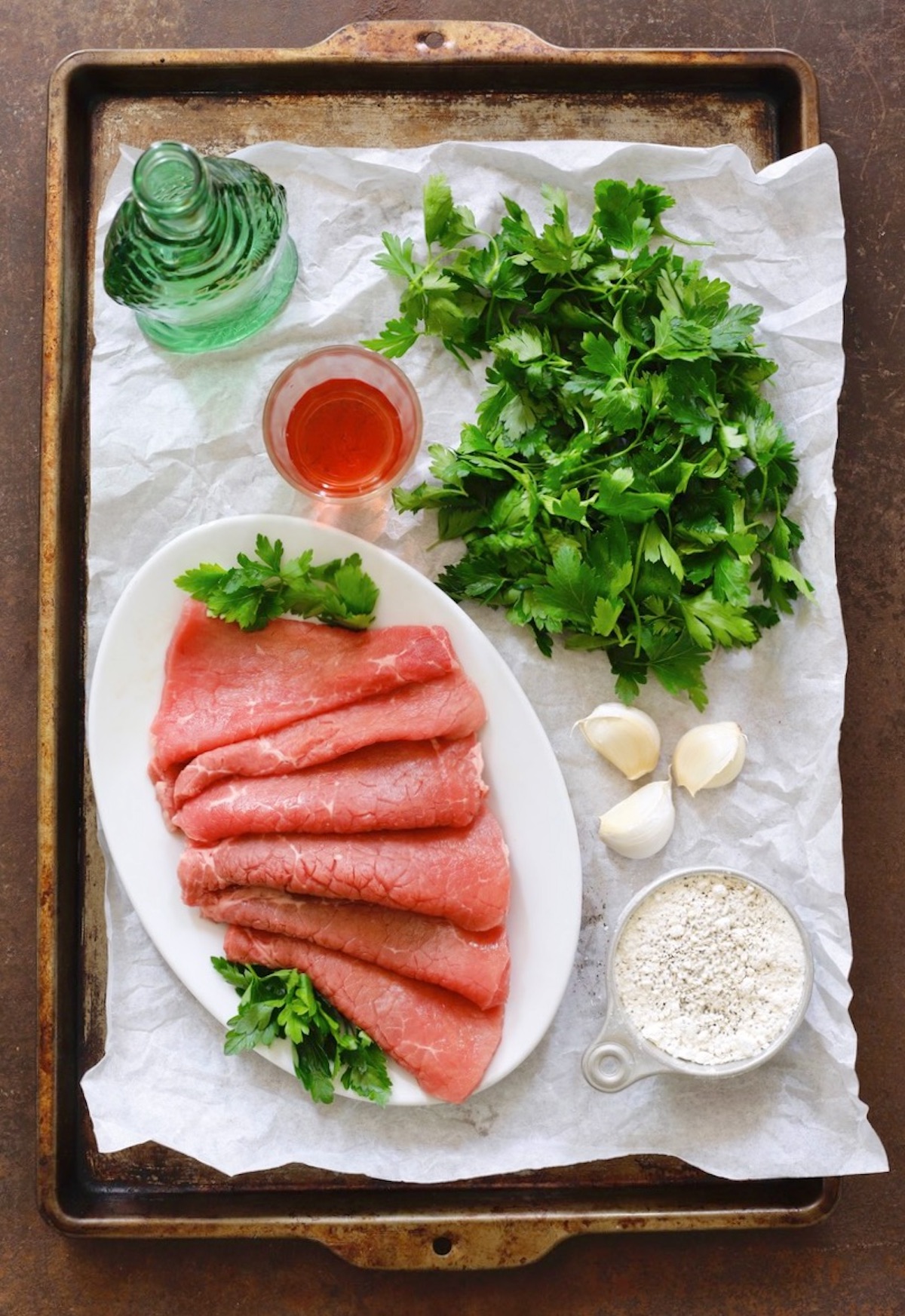
- Veal or beef – top round, cut in thin slices (known as scallopini or escalope)
- Flour – all purpose flour for dredging the scallopini and help thicken the delicious sauce
- Olive oil – extra virgin always, for sautéing and braising the meat
- Fresh garlic – lots of it for its characteristic flavor
- Wine – you can use white or red; it adds sharpness and pungency to the dish
- Beef broth – it adds richness to the dish, but in a pinch you can just use water
- Parsley – lots of fresh, we add flat leaf parsley towards the end of the cooking
- Seasoning – just sea salt and freshly ground pepper
The secrets to a great Greek Sofrito
- Choosing the right meat: this is the key to a flavorful, succulent and delicious dish. If you cannot find veal scallopini, then a good quality of thinly sliced stewing beef is the next best option. Top round is one of these cuts that works well, especially after we tenderize the meat by pounding it lightly so we can also ensure even thickness
- The cooking method: this is a typical dish that benefits from a low and slow cooking, the technique also known as braising. The slices of beef are first dredged in flour, then we sauté them until light brown to seal in the juices, then finally braised in a flavorful wine, vinegar and garlic sauce. Once the sauce is thickened, we stir in the fresh parley and the sofrito is ready to enjoy!
What to serve with the Greek Sofrito
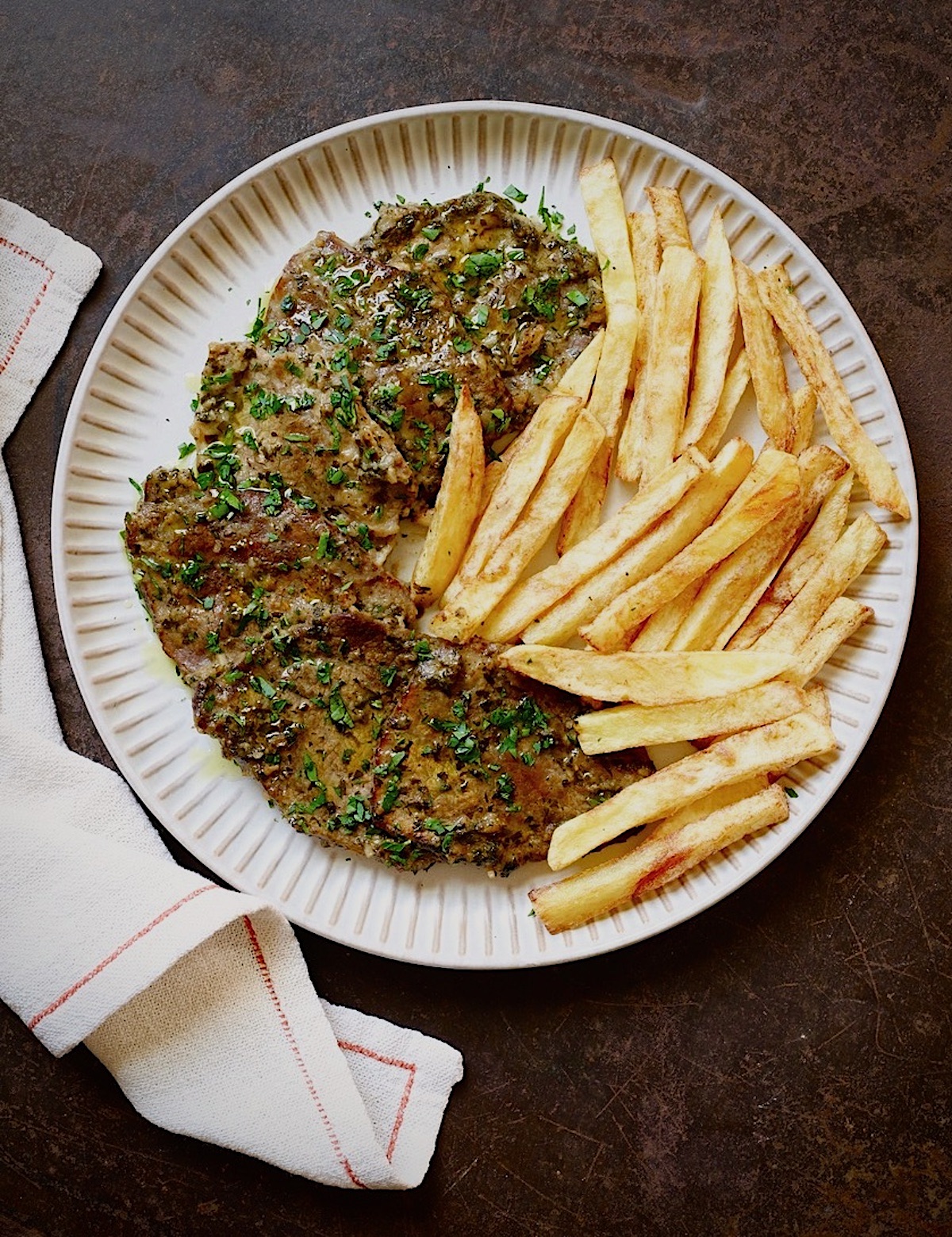
Sofrito is usually served in one of two ways: over creamy mashed potatoes, or, with fried potatoes cooked the Greek way, which is to say, in plenty of olive oil. A nice Greek lettuce salad or the traditional Greek tomato salad, both pair well with the rich meaty flavor of the dish.
Why you will love this dish
This traditional Greek dish is a staple in households on the island of Corfu and is often served for a Sunday meal. Growing up on the mainland in northwestern Greece, just across from Corfu, this is a dish my mom used to make often!
The ingredients the recipe calls for are few and the preparation is quite simple. All this dish really needs is some unhurried time to braise and the sauce to thicken. At the end, you will be rewarded with a succulent, delicious and highly aromatic dish that everybody will love!

- 2 lbs. top round veal, or beef; boneless and thinly sliced
- --- sea salt and freshly ground black pepper
- ¾ cup all purpose flour for dredging
- 6 TBSP. extra virgin olive oil (plus more, as needed, for sautéing)
- 6 medium garlic cloves, cut into thin slices
- ¼ cup white wine vinegar
- ¼ cup white wine
- 1½-2 cups beef stock, warmed
- ½ cup fresh parsley, finely chopped
- Prepare the meat: use a meat mallet to pound slightly the slices of beef. Season the slices with salt and pepper on both sides and lightly dredge in the flour. Tap off any excess flour and set aside.
- Place a large, deep, non-stick skillet over medium-high heat. When it gets hot, add 4 TBSP. of olive oil. Add the slices of meat, a few pieces at a time, and cook on both sides until nicely browned. Do not overcrowd the pan. Be sure to cook the meat in batches so the temperature of the skillet does not get too low. Add the rest of the olive oil and continue cooking the next batch of sliced meat. As the slices cook, transfer the meat to a platter and keep them warm.
- Lower the heat to medium and, without cleaning the skillet, add the sliced garlic. Sauté the sliced garlic for just 30 seconds and stir in the vinegar (which will immediately steam up and lose some of its pungency). Keep cooking for another minute or so, scrapping the bottom of the pan with a wooden spoon to incorporate all the bits. Next, add the wine and increase the temperature to deglaze the skillet. Once the alcohol has mostly evaporated, return the sautéed meat to the skillet, give it a minute to warm up and pour the warm stock over it.
- Turn the heat down to medium-low and simmer for about 30 minutes (depending on the meat), until the sauce is thickened and the meat is very tender. If it needs to cook a little longer and the liquid is evaporated, add a little warm water and continue simmering for a little longer.
- Just before the meat is finished cooking, stir in the fresh parsley, and cook for about 5 minutes more. Taste and adjust the seasoning if needed. There should still be plenty of sauce left in the skillet. Serve warm over mashed potatoes or next to Greek fries.
JOIN THE MAILING LIST!
Sign up with your email address to receive every new recipe straight to your inbox!
Your support for my blog is greatly appreciated, please consider reviewing and rating my recipes! ⭐️⭐️⭐️
This is one of my absolute favorite Greek dishes, so nice to see this recipe on the blog! This is, as Chef Marilena writes, very easy to put together and the results are amazing. Be sure to make plenty of the sauce! Goes great with French fries and a Greek salad. Thank you for posting this!
Thank you very much, Kevin – this is such a favorite family recipe!